















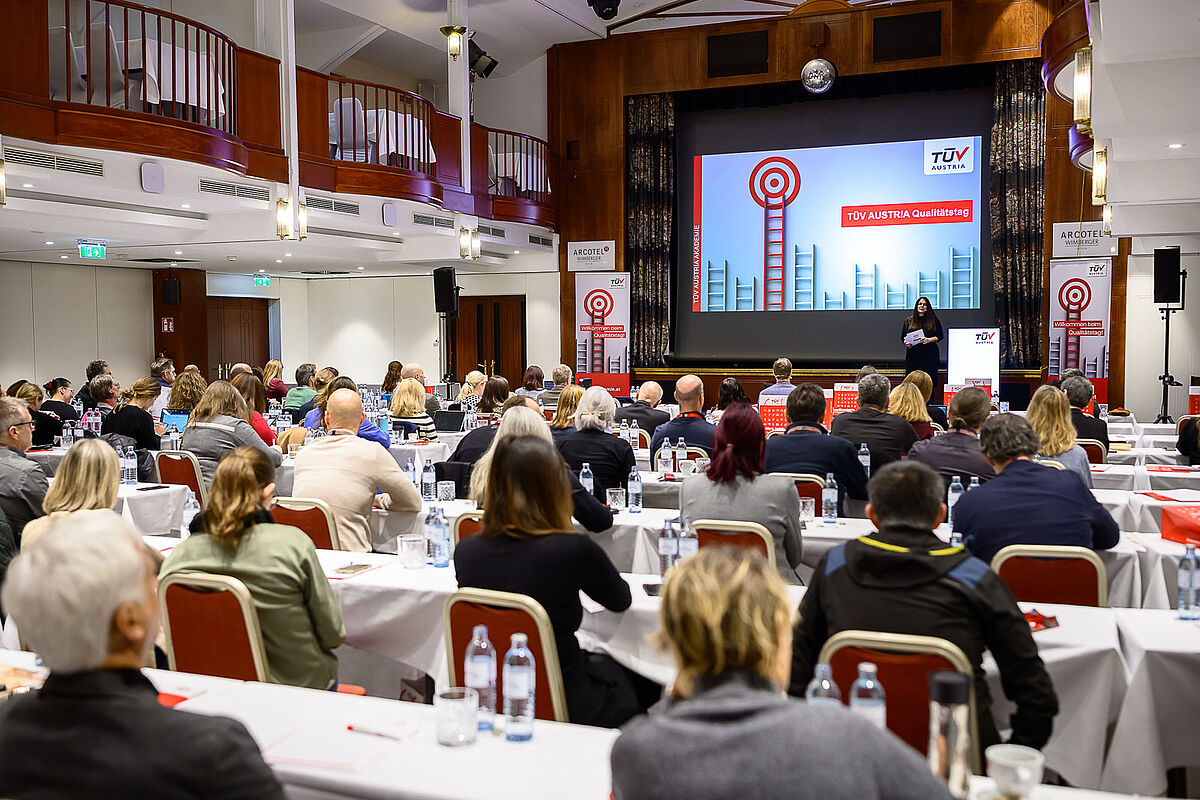
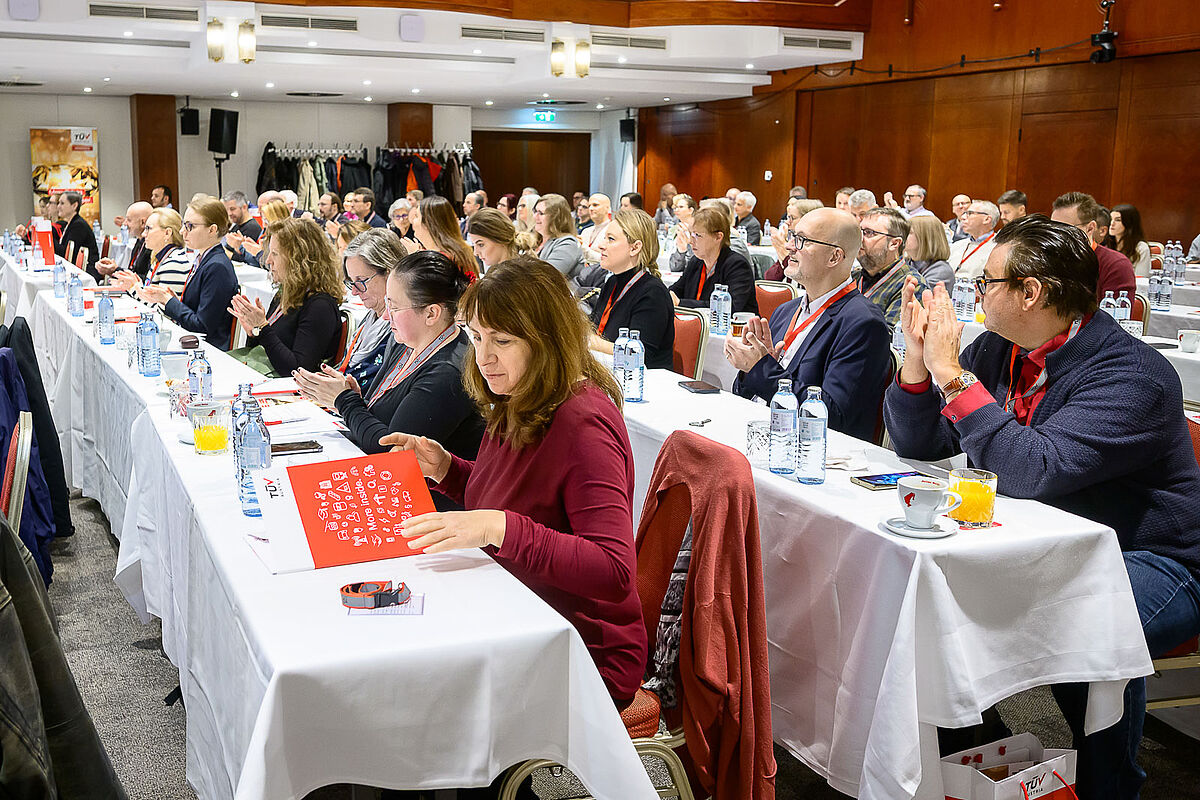



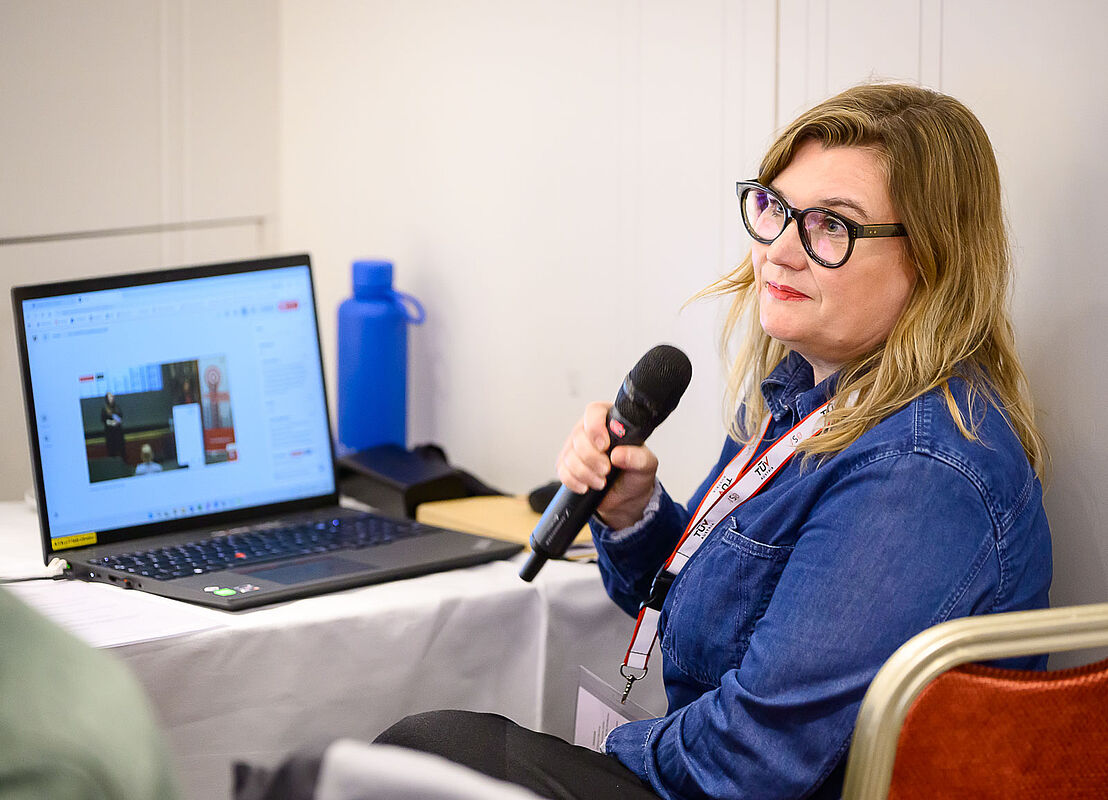


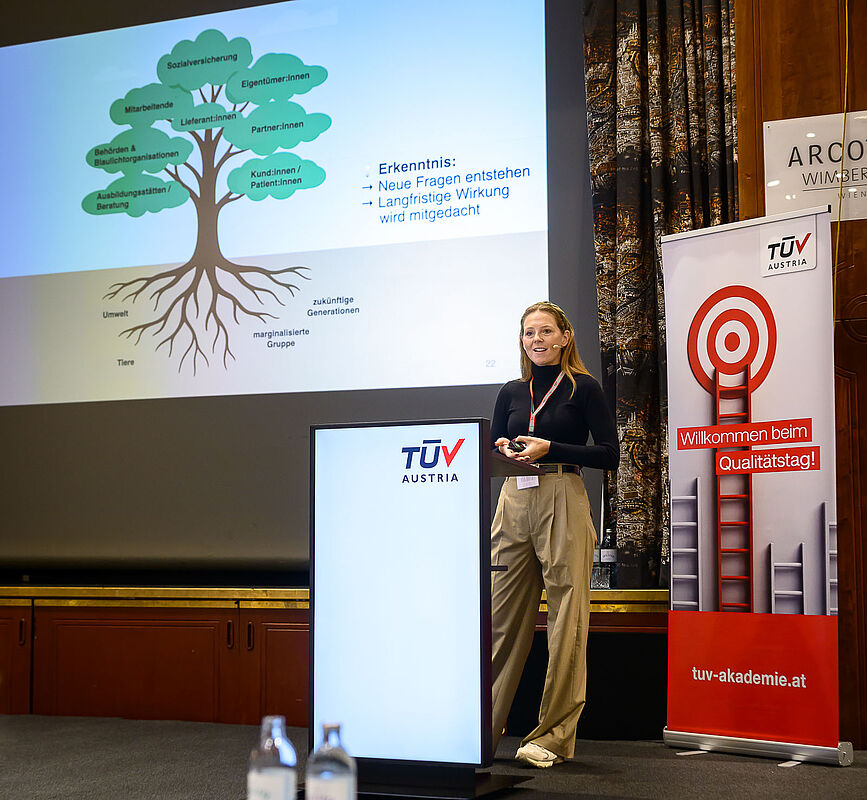
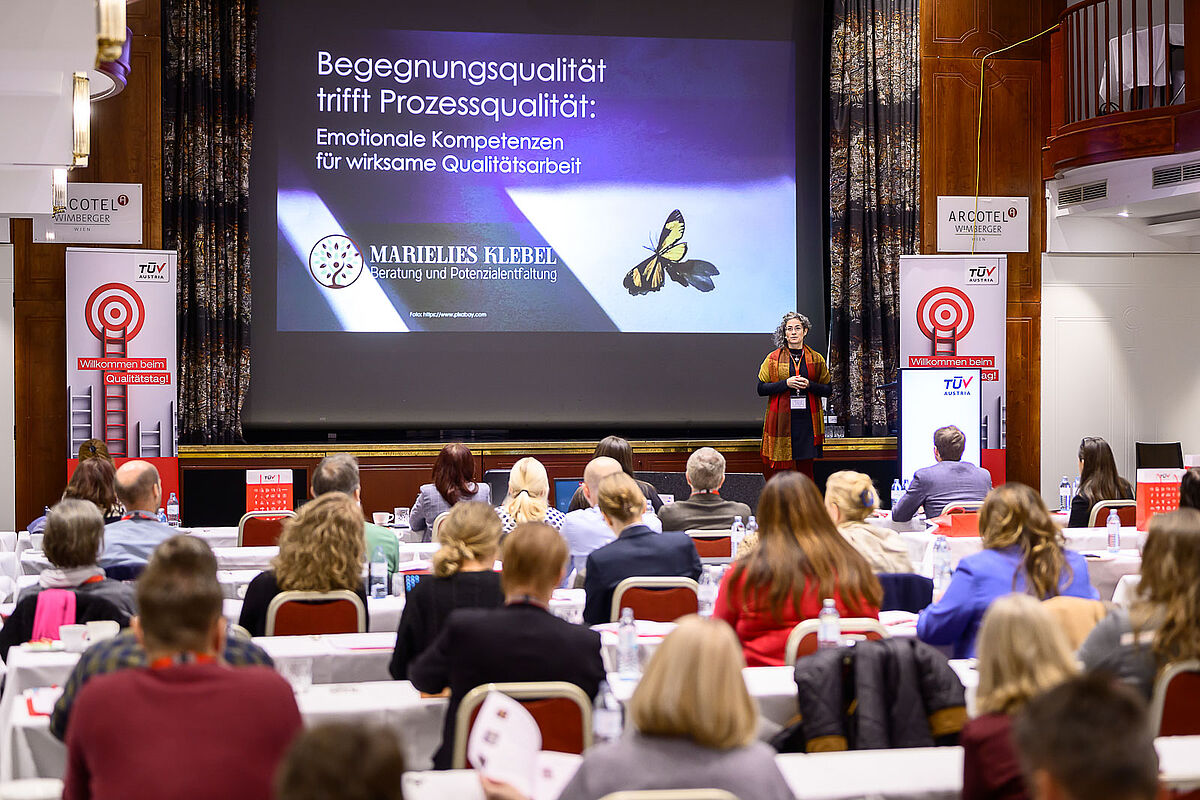



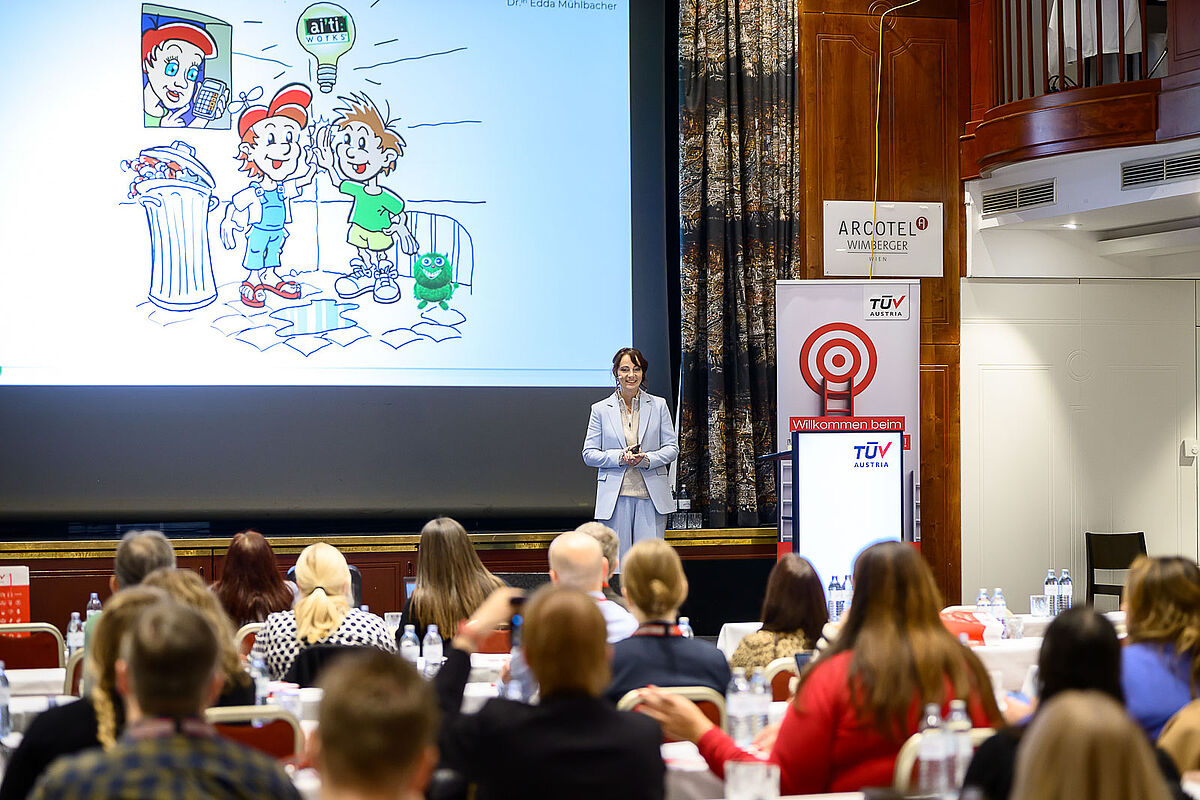
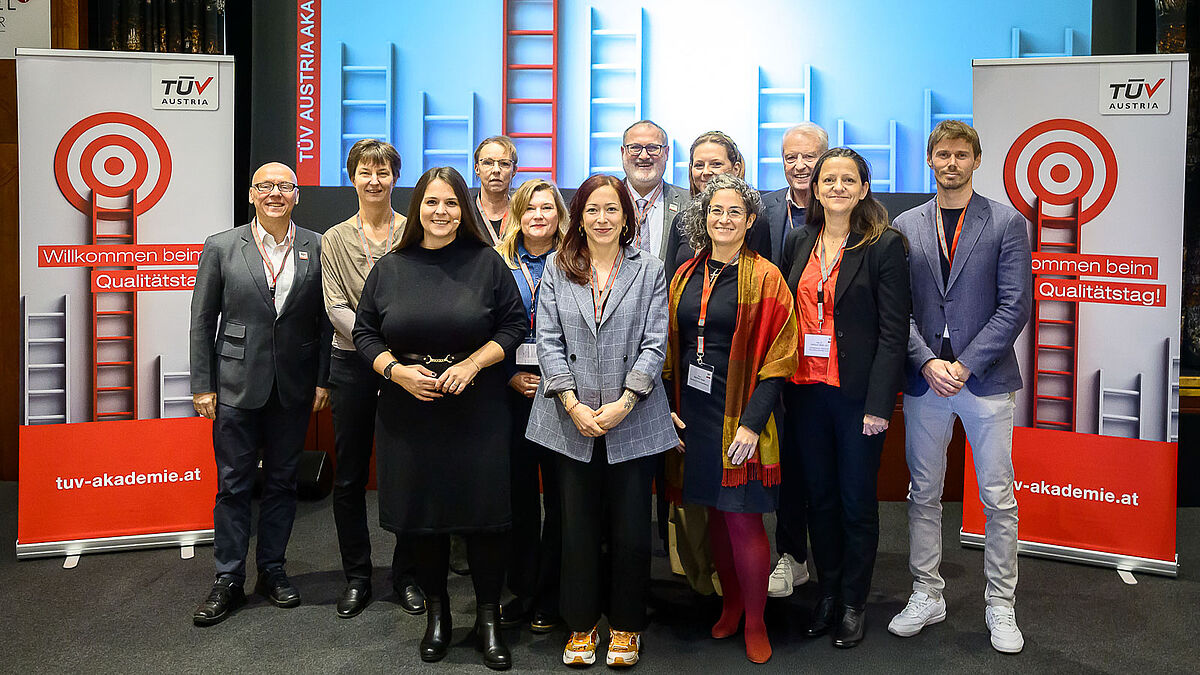
Satisfaction is a quiet indicator with a powerful impact. At the Quality Day, Mag. Dr. Gertraud Weiß, MPH, from the Oberndorf Health Center demonstrated impressively how to not merely survey patients and employees, but truly understand them. Using scientifically grounded models such as the disconfirmation model and Herzberg’s two‑factor theory, expectations, experiences, and engagement were captured in a systematic way. Response rates of 70% among patients and 62% among employees speak for themselves. Yet the real strength lies in what happens afterwards: feedback is not filed away but transformed into tangible improvements — whether in meal services or leadership culture.
Turning Standards into a Future You Can Live
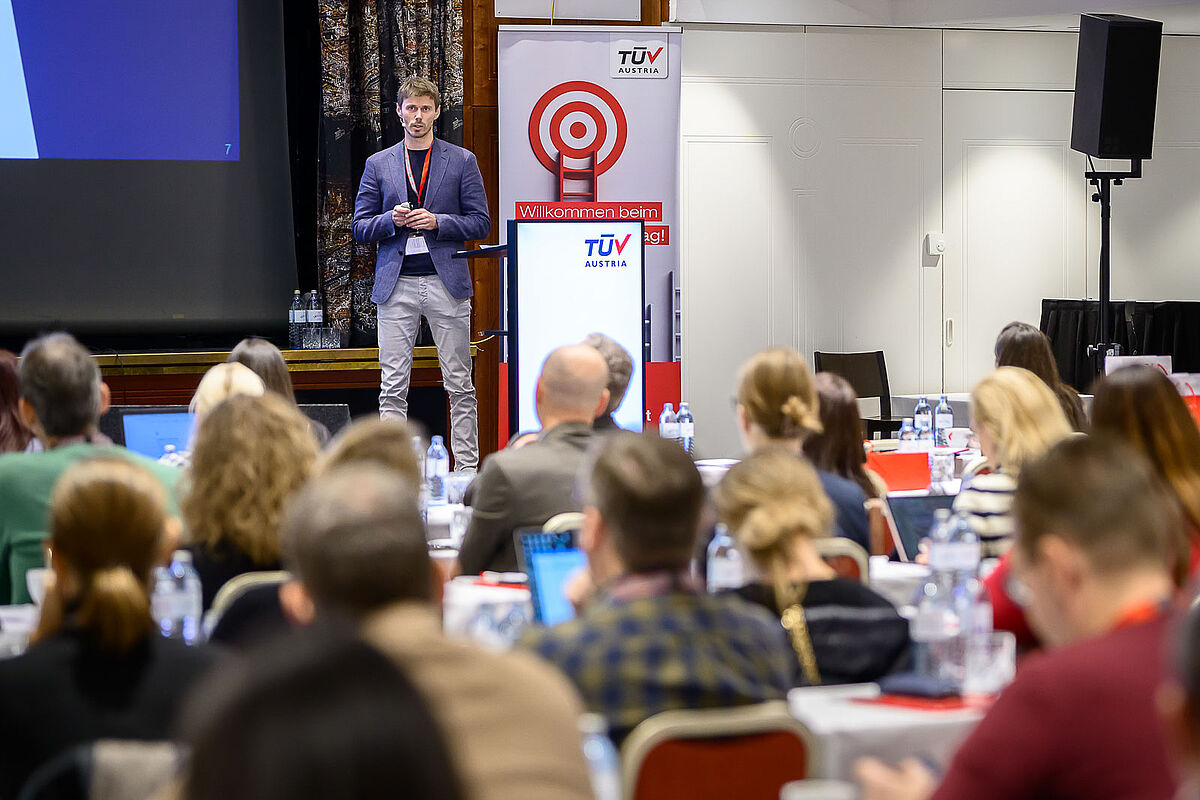
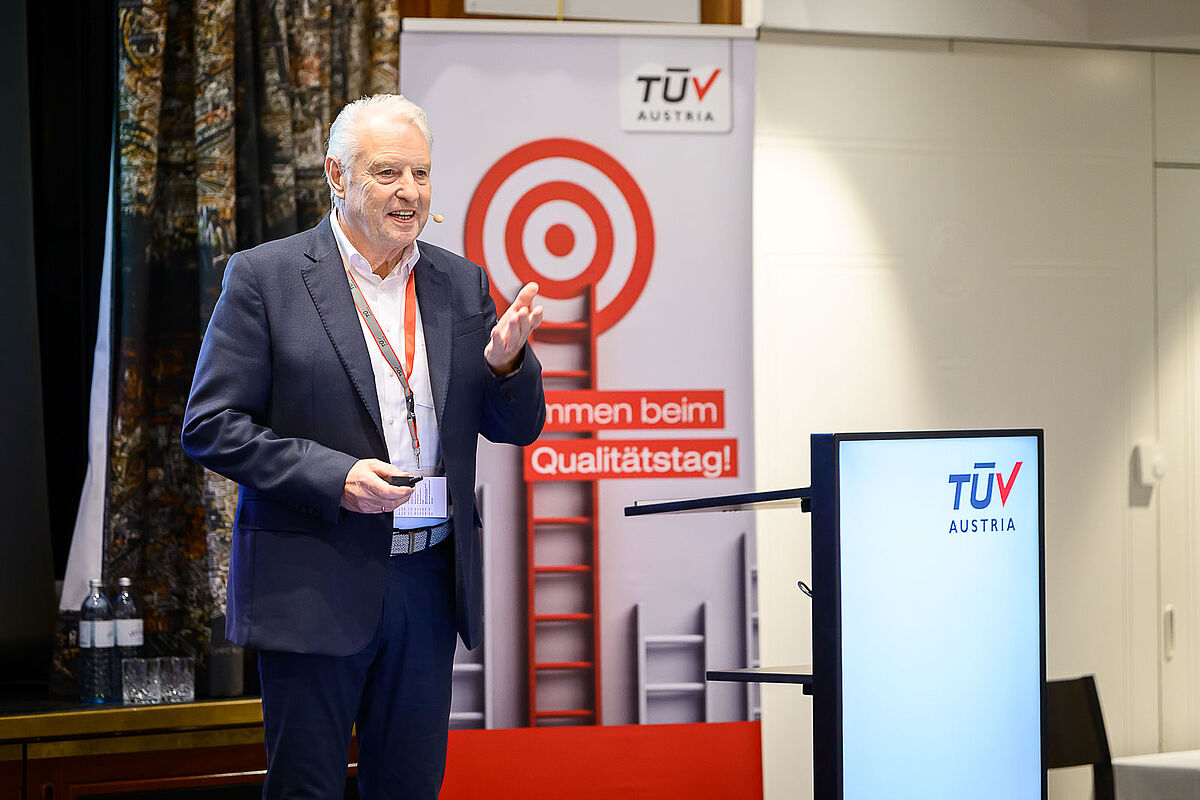
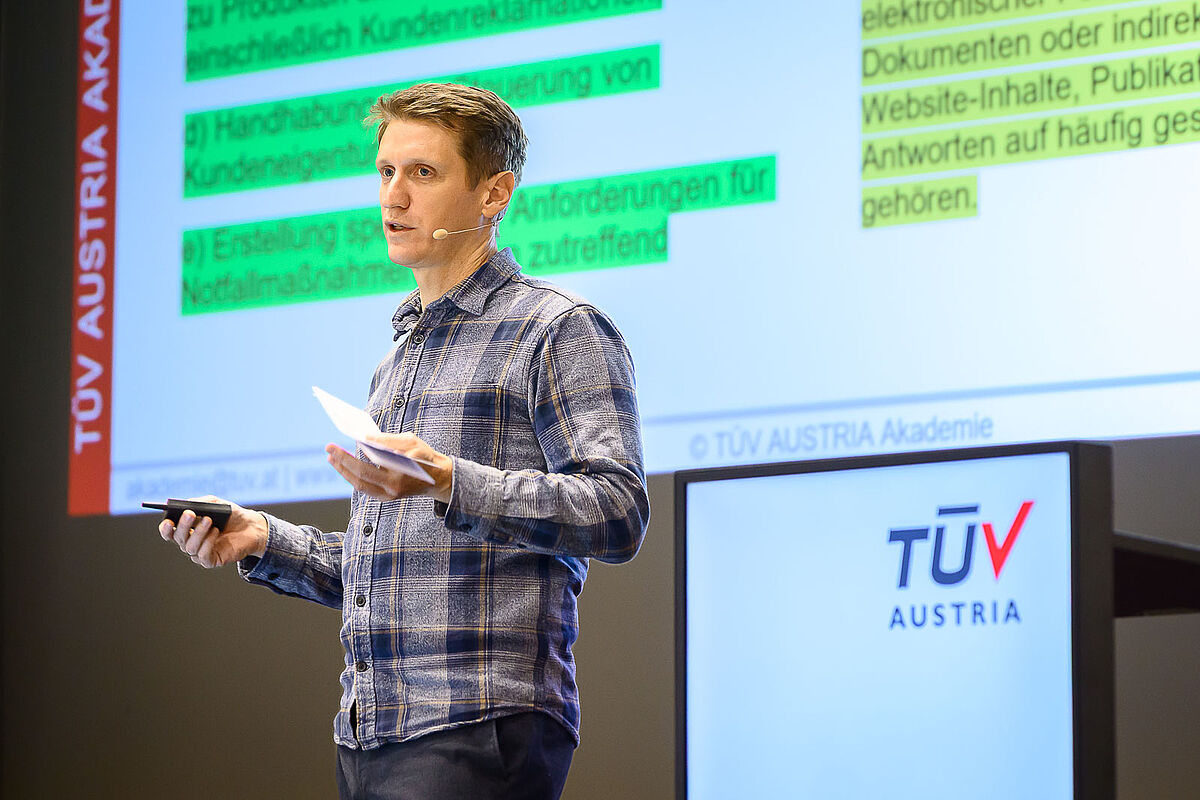
But what if the future is not only lived, but also redefined? That is precisely what is happening now with the revision of ISO 9001:2015. In his presentation, DI Maximilian Wiesinger, MSc, Lead Auditor at TÜV AUSTRIA, offered an exclusive insight into the current state of the standard’s development.
The new version, ISO 9001:2026, introduces changes that organizations should be aware of early on. For the first time, climate change is explicitly named as a contextual factor that organizations must assess and integrate into their strategic direction.
The expectations of interested parties — from customers and employees to authorities — may in future include requirements related to sustainability and climate protection. Environmental responsibility thus becomes an integral component of quality management.
Particularly noteworthy is the new emphasis on ethical conduct. Top management will no longer be evaluated solely on leadership strength, but also on whether it actively promotes fairness, justice, and accountability. Ethical behaviour is defined as part of the quality culture and is given a permanent place in the standard. This addition is more than a formal adjustment — it is a clear signal in favour of values‑driven corporate governance.
The revision also brings structural changes. Risks and opportunities will be considered separately, enabling more precise planning and evaluation. Product development will gain greater flexibility to better support innovation cycles. A comprehensive annex with explanations is intended to facilitate implementation and provide practical guidance for everyday application.
Timeline and Transition Period
The international standard ISO 9001:2026 is expected to be published between July and September 2026, with the European and Austrian versions (EN ISO and ÖNORM EN ISO) to follow by November 2026 at the latest. Companies will then have a transition period of approximately three years to adapt their quality management systems — in line with previous revisions.
Conclusion
Whether subjective perception or objective standard — quality thrives on dialogue. The Quality Day 2025 made one thing clear: those who take satisfaction seriously and view standards as an opportunity shape not only processes, but trust. And that is the highest form of quality.